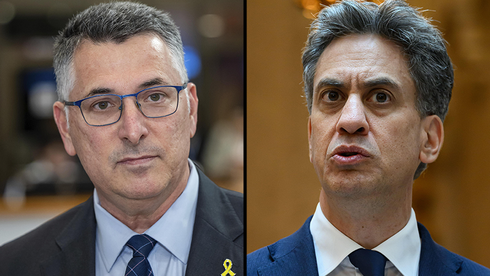
Ed Miliband and Israel have become a major political topic in the UK as the British foreign secretary pushes for a significant change in Britain’s policy toward Israel.
Miliband, who became UK Foreign Secretary in July 2026, has taken a stronger position against Israeli settlement expansion in the occupied West Bank. He has warned that Israel’s planned E1 settlement project could undermine the possibility of a future Palestinian state and has promised a “comprehensive” package of measures against settlement activity.
His position comes amid continuing international concern over the war in Gaza, the humanitarian situation affecting Palestinians and the expansion of Israeli settlements in the West Bank.
But what exactly does Ed Miliband believe about Israel? Has he turned against Israel? What has he said about Gaza? And what measures could Britain take?
Who Is Ed Miliband?
Ed Miliband is a British Labour politician who has served as a Member of Parliament for Doncaster North since 2005.
He became leader of the Labour Party in 2010 and served as Leader of the Opposition until 2015.
Before returning to the Foreign Office, Miliband served as Secretary of State for Energy Security and Net Zero from July 2024 to July 2026.
On July 20, 2026, he was appointed Secretary of State for Foreign, Commonwealth and Development Affairs, making him Britain’s foreign secretary.
His new position has placed him directly at the center of Britain’s diplomatic response to the conflicts and political developments in the Middle East.
What Is Ed Miliband’s Position on Israel?
Miliband’s position is best described as support for Israel’s security alongside strong opposition to policies that he believes undermine Palestinian statehood and international law.
He has not presented his position as opposition to Israel’s existence.
Instead, Miliband has repeatedly emphasized the need for a sustainable peace involving both Israelis and Palestinians.
In his statement after becoming foreign secretary, he said Britain must work toward sustainable peace in Palestine and Israel, including an end to the suffering of people in Gaza and security for people in Israel.
That distinction is important.
His criticism has increasingly focused on the Israeli government’s actions in Gaza and the West Bank, particularly settlement expansion.
Ed Miliband and the E1 Israeli Settlement Plan
The most significant recent development in the Ed Miliband Israel story concerns the Israeli government’s plans for the E1 settlement area in the West Bank.
In August 2026, Israel published a tender connected to the E1 settlement project.
Miliband strongly condemned the move.
In an official statement on August 19, he described the project as an “unacceptable and destructive act” and said it could separate the West Bank from East Jerusalem, threatening the viability of a two-state solution.
The British government also summoned Israel’s chargé d’affaires over the issue.
Miliband’s position reflects Britain’s longstanding support for a two-state solution, in which Israelis and Palestinians would have separate states living alongside one another.
Why Is E1 So Controversial?
The E1 area is strategically important because of its location between East Jerusalem and the central West Bank.
Critics of the settlement plan argue that development there could make a contiguous Palestinian state significantly more difficult to establish.
Miliband has therefore described E1 as a major threat to the possibility of a viable Palestinian state.
The British government has said Israeli settlements in the occupied Palestinian territories are illegal under international law and that settlement expansion threatens the two-state solution.
Israel disputes many international criticisms of its policies and has argued that security considerations and other factors must be taken into account.
Ed Miliband Promises a “Comprehensive Reset” on Israel
The issue escalated further on September 1, 2026, when Miliband told MPs that Britain would introduce a “comprehensive” set of measures in response to Israeli settlement activity.
He said the government would not accept the destruction of the two-state solution and would act against developments that threaten it.
The announcement represents one of the strongest indications yet that the UK government is considering additional economic and diplomatic pressure connected to Israeli settlements.
Potential measures reported in connection with the government’s review include restrictions on trade involving goods from Israeli settlements and possible action against companies connected to settlement activity.
However, the government had not yet published the complete package when Miliband made the announcement.
Could Britain Ban Trade With Israeli Settlements?
This is one of the biggest questions surrounding Miliband’s Israel policy.
The British government has been considering tougher measures against businesses involved in Israeli settlements.
Prime Minister Andy Burnham had previously indicated that his government would consider banning trade in goods produced in illegal Israeli settlements.
Miliband has now signaled that a broader package of measures is being prepared.
It is important to distinguish between:
- Trade with Israel as a country
- Trade with Israeli settlements in the occupied West Bank
- Companies involved in settlement construction or development
- Wider sanctions against Israeli individuals or organizations
A policy targeting settlement-linked businesses would therefore not automatically mean a complete British trade embargo on Israel.
What Has Ed Miliband Said About Gaza?
The war in Gaza has also become an important part of Miliband’s foreign-policy agenda.
When he became foreign secretary, he said Britain needed to work toward a sustainable peace for both Palestinians and Israelis.
He specifically referred to the suffering of people in Gaza while also emphasizing the importance of security for Israelis.
His approach therefore attempts to address both sides of the conflict, while increasingly criticizing Israeli policies that Britain believes are damaging prospects for peace.
The broader Gaza conflict remains highly contentious, with Israel citing security concerns and the threat posed by Hamas, while Palestinian officials and international organizations have repeatedly highlighted the enormous humanitarian consequences of the conflict.
Does Ed Miliband Support Palestine?
Miliband supports the establishment of a Palestinian state as part of a two-state solution.
That does not mean that his foreign policy is simply anti-Israel.
His stated position is that Palestinians should have a viable state while Israelis should have security.
The UK government has therefore framed its criticism of Israeli settlements around the argument that settlement expansion makes a negotiated two-state solution increasingly difficult.
Miliband’s position is consistent with Britain’s broader diplomatic support for a two-state solution.
Is Ed Miliband Anti-Israel?
Ed Miliband’s criticism of the Israeli government should not automatically be described as opposition to Israel itself.
He has explicitly said that sustainable peace requires both Palestinian rights and Israeli security.
His current policy is focused particularly on:
- Israeli settlement expansion
- The E1 development
- The future of a Palestinian state
- The humanitarian situation in Gaza
- International law
- Israeli and Palestinian security
- Britain’s diplomatic relationship with Israel
Miliband’s supporters argue that stronger pressure is necessary to protect the possibility of a two-state solution.
Critics, meanwhile, may argue that Britain’s increasingly confrontational approach risks damaging the longstanding UK-Israel relationship.
How Has Israel Responded to Ed Miliband?
Israel has strongly criticized the prospect of British sanctions or other punitive measures.
Israeli Foreign Minister Gideon Sa’ar warned that Israel could retaliate if Britain imposed measures over the settlement issue.
The dispute therefore has the potential to affect diplomatic relations between the two countries.
Britain and Israel have historically maintained significant relationships in areas including trade, technology, intelligence and security.
The recent deterioration in relations reflects growing disagreements over Gaza and the West Bank.
Why Is Ed Miliband’s Israel Policy Important?
Miliband’s position matters because Britain remains an influential diplomatic and economic partner of Israel.
If the UK introduces significant restrictions on companies or goods connected to settlements, it could add pressure on other Western governments to consider similar measures.
Several European countries have already expressed concern about the E1 settlement plan.
Britain has also joined other countries in condemning settlement expansion and warning about the consequences for a future Palestinian state.
The eventual measures announced by Miliband could therefore have significance beyond Britain.
Ed Miliband’s Political Background on Israel and Palestine
Miliband’s interest in international affairs predates his current role as foreign secretary.
As a senior Labour politician, he has been involved in debates surrounding Britain’s approach to the Middle East for many years.
His political background also matters because his new foreign-policy position comes after a period in which he served as energy secretary.
His appointment to the Foreign Office in July 2026 represented a major change in responsibility.
The Foreign Office now places him at the center of Britain’s response to conflicts involving Israel, Palestine and other countries across the Middle East.
Ed Miliband and the Two-State Solution
The two-state solution is central to understanding Miliband’s position.
The basic idea is that an independent Palestinian state would exist alongside Israel, with both peoples having the right to security and self-determination.
Miliband believes settlement expansion threatens that possibility.
His opposition to E1 is therefore not simply about one construction project.
He views the project as part of a larger question about whether a geographically viable Palestinian state can still be established.
The British government has repeatedly said that it does not want to see the possibility of a two-state solution disappear.
What Could Happen Next?
The next major development will be the British government’s promised comprehensive package of measures relating to Israeli settlements.
Miliband said the government would set out the measures in the coming weeks.
Several possibilities are being discussed, including:
- Restrictions on settlement-linked trade
- Measures against companies involved in settlements
- Additional sanctions
- Diplomatic pressure
- Restrictions on British involvement in settlement projects
The precise scope of the measures will determine how seriously the policy shift affects Britain’s relationship with Israel.
It will also reveal whether Miliband’s “reset” represents a limited policy adjustment or a much broader change in Britain’s Middle East policy.
Frequently Asked Questions About Ed Miliband and Israel
Is Ed Miliband against Israel?
Miliband has strongly criticized Israeli settlement expansion and Israeli government policies, particularly those he believes threaten Palestinian statehood. However, he has also emphasized Israel’s right to security and supports a sustainable peace involving both Israelis and Palestinians.
What did Ed Miliband say about Israel?
Miliband has condemned Israel’s E1 settlement project and said it threatens the possibility of a viable Palestinian state. In September 2026, he promised a comprehensive package of measures in response to Israeli settlement activity.
What is Ed Miliband’s position on Gaza?
He has called for an end to the suffering of people in Gaza while also emphasizing the security of Israeli people. His stated objective is a sustainable peace for both Israelis and Palestinians.
Does Ed Miliband support a Palestinian state?
Yes. Miliband supports the two-state solution, and his opposition to Israeli settlement expansion is closely connected to his belief that settlements threaten the viability of a future Palestinian state.
What is E1 in Israel and Palestine?
E1 is an area of the West Bank where Israel has pursued settlement development. The British government argues that construction there could effectively divide parts of the West Bank and make a future Palestinian state more difficult to establish.
Is Britain going to sanction Israel?
Britain has announced plans for a comprehensive set of measures concerning Israeli settlements, but the full package had not yet been published when Miliband announced it on September 1, 2026.
Is Ed Miliband the UK foreign secretary?
Yes. Ed Miliband became the UK’s Secretary of State for Foreign, Commonwealth and Development Affairs on July 20, 2026.
What does Ed Miliband want from Israel?
His current policy emphasizes stopping settlement expansion, protecting the possibility of a two-state solution, addressing the humanitarian crisis in Gaza and maintaining security for Israelis and Palestinians.
Final Thoughts
The Ed Miliband Israel story has become increasingly important because Britain’s new foreign secretary is promising a significant change in how the UK approaches Israeli settlement activity.
His opposition to the E1 settlement project has been particularly strong. Miliband argues that continued settlement expansion could destroy the territorial basis for a Palestinian state and therefore undermine the two-state solution.
At the same time, Miliband has stressed that Britain’s objective is not simply to oppose Israel. He has repeatedly paired his calls for Palestinian rights and an end to suffering in Gaza with a commitment to Israel’s security.
The immediate question is what his promised “comprehensive” measures will actually contain.
If Britain moves toward significant restrictions on settlement-linked trade or companies, the decision could mark one of the sharpest changes in UK-Israel relations in years. It could also put Britain at odds with the Israeli government while strengthening calls from other European countries for tougher action.
For now, Miliband’s message is clear: Britain says it will not accept policies that it believes are making a two-state solution impossible.